
‘This Strange Light’ by James Clarke
The message came through at dusk, a phone call when silence had grown customary between the sisters. The mobile vibrated in the car’s door well but Annie didn’t know who was calling – she was panting in the back seat beneath Jethro, watching him peel off the condom like it was a strip of Sellotape. Snow tumbled outside. Sticking already, it began to coat the wall surrounding the reservoir. It disappeared into the water and dissolved on the road. Annie often thought what a sight she and Jethro must make when they were entangled in their duty vests like this, a rustling mass of hi-vis and polyester. She would have laughed aloud at the thought if it hadn’t been for the Airwave terminal bleeping on the dash. It wouldn’t have been a happy sort of laughter anyway.
She played Alex’s voicemail back when she could, managing three listens in the McDonald’s car park a little later. Rosie Shannon was dead, and did Annie want to come and pay her respects? Jethro returned with a hot paper sack of food and two noisy pots of Coke, and he passed the whole lot to Annie through the passenger window. Dinner came free of charge, such were the privileges of law enforcement, although Annie wouldn’t manage her fries. As the steam from her burger drifted around her, she realised she was going to cry. The Airwave terminal bleeped with another bulletin. Burglary in progress. This time Annie answered its summons with the siren, accelerating beneath the turnpike, second exit. She loved the urgency of the response car. She felt Jethro’s hand upon her leg. The tears finally came as they picked up speed. The clarity of the road seemed fitting: bad things still happened on nights as beautiful as this. Rosie only had me, Alex had said in her message. I suppose now I only have you.
*
Annie lay with Mark later that morning. This shared time when he was waking and she was about to sleep felt important. As a low-ranking uniformed officer with little chance of promotion (she knew that now) Annie’s life was spent in the throes of shift work. Her cycle was divided into two earlies, two lates and two nights followed by four days off, which meant she had a fractured social life at the best of times and barely knew what day of the week it was. This seemed to suit Mark. Since leaving the design agency and going freelance, he could work from home in peace, see his friends whenever he wanted and have Annie around sporadically. Annie eased a finger under the determined elastic of the faded knickers Mark enjoyed teasing her about so much, and removed them. Next, she used a big toe to free herself of each sock, then unfastened her blouse and bra while staring at the lunar terrain of the ceiling. Speckled, flaked. Several strands of Mark’s chest hair had gone the same colour.
Annie changed into the baggy purple T-shirt she kept stowed under the pillow.
Wake up, she said.
Mark didn’t stir.
Mark.
Still nothing.
Annie rose from the bed. Fatigue-sensitive to the morning chill, she stepping-stoned to the window using the clothes Mark had left all over the floor. Her view was of a pragmatically laid-out arcade of businesses and flats. In one of these flats, the place above the barber’s, lived an unsympathetic-looking neighbour in his mid-forties. Annie would often see the man at this time of day, and wondered if they would nod at one another, as they did now, if they ever made eye contact out in the real world. She breathed on the window and wrote her name in the steam for him. The other side of the glass was dressed by snow as dense as mashed potato, and the geraniums Mark had planted in the sill box were all dead. As a Routemaster splattered through the slush below, Annie pressed the lump that had recently emerged on her left breast. The bus shook the entire flat. The silence that closed in after it had gone felt gigantic.
*
The seat belt was a pain in the neck all the way up the M6 – then again, perhaps Annie was being sensitive. It took four hours to get to the valley: a sodden vein of towns running through the West Pennines where you still got comments about how you lived from people you no longer knew. There were many extinct factories here, a textile mill converted into apartments, more bakeries than you’d expect, and more takeaways. Just off the roundabout in Rawtenstall town centre was a market where, by night, bored youngsters languished in the shadows like packs of jackals.
Annie steered the car up a buckled drover track leading to Arnold Grange, a former farmhouse horseshoed by a fine belt of land. This isolated and whitewashed building had been Rosie Shannon’s home for the last three decades of her life. Since she took over the place former chicken coops had been fitted with glass and transformed into miniature greenhouses, glittered bunting was strung from guttering to eave, and teal and silver streamers dangled from the trees. Anything that could house a plant did so: buckets, kitchen sinks, steel bath- tubs. Even a basket still attached to its bicycle was packed with verbena, the bike’s spokes laced with long grass and browned-up forget-me-not.
Annie halted the car and made her way along a barked trail that met the front door. She could see the rugged staircases of the hills, the bifurcating townships of the valley. Although people said places like this never changed, Annie didn’t think that was true. In her experience everything evolved by increments, whether you were paying attention or not.
The door swung open to reveal Alex, who no longer looked anything like her older sister. A lot of blonde hair smothered her shoulders now, a haze of rosacea bubbling up either cheek. Alex called herself an artist, and she dressed with an artist’s pliancy, wearing a green blouse buttoned, matron-like, to the top, a huge fluffy cardigan and navy blue culottes stopping shy of either ankle. Although you could no longer tell there were two years between them, if how Annie felt most of the time could be captured on another face, Alex’s was it. Alex was the better-looking sister and from an early age Annie had known it. As a consequence she had developed a less outgoing personality, and still found herself jealous of her sister’s spacy, heavy-lidded eyes, because they made Alex seem like she was hiding something, which had intrigued people, especially boys, when they were young. That was a long time ago. Annie set down her rucksack and entered the house. She was about to speak when Alex pulled her into an embrace.
It’s good to see you.
It’s good to see you too.
*
The glass table bore two urns. One held the cremains of Rosie’s husband, Joss, a solicitor who’d suffered a heart attack on the brink of early retirement, sliding off the bench in the garden like scrambled eggs from a plate. The other contained what was left of Rosie, who’d been rushed into A and E after eating what turned out to be death cap mushrooms. Rosie’s heart was damaged, her liver and kidneys. After living through sixty summers, she had spent her last evening on earth in a shroud of violet light because the intensive care ward was in a south-facing wing at the top of the hospital, and her bed was stationed by the window.
Joss’s ashes had been waiting to be reunited with Rosie’s for fifteen years, and now that the inquest had delivered a verdict of death by misadventure, the cremation had been allowed to take place, and the wait was over. Alex was pretending she was okay with everything.
Surprised you managed the time off, she said.
We were between shift cycles.
Makes things easier to arrange, I suppose.
Annie nodded. Her sister didn’t seem able to look at the urns.
What did you tell them? asked Alex.
I just said she was my aunt. They were pretty understanding.
Annie wasn’t sure if Alex’s snort was intended to register disparagement, amusement or plain doubt. She began to fiddle with the copper bracelet that was supposed to protect her from arthritis, and watched Alex delve a hand into an upper cupboard, shadow cloaking her sister’s features. Well, she said, they really were.
The spacious kitchen was unusual in that there were no windows, so the deep stretch of garden on the other side of the wall could only be imagined. An empty bird feeder would be there, as would Rosie’s manky trellis, crucified against the fence behind Joss’s bench. The death caps had grown at the foot of the kinked crab apple tree near the compost heap. What had possessed Rosie to gather them and add them to her soup?
Annie gripped her mug and held it out for the ice-dusted bottle of vodka Alex drew from the freezer drawer. Bearing the old Weetabix logo, the mug must have been sent off for decades ago. It hadn’t been cleaned properly in about as long, the tobacco-tan of brews gone by circling its inner base like the rings of a severed tree trunk. Rosie Shannon had loved trees, and once single-handedly saved an ancient oak the council were planning to cut down by chaining herself to its mesh of upper branches while swathed head to toe in coloured ribbons, singing songs of protest. Annie smiled as the vodka arced into her mug. It was syrupy with the cold and would be the better for it.
There was a slight challenge to Alex’s voice as she raised her mug. Na zdrowie.
The language of their parents. Was she being ironic? It was Annie who visited their father and his new family every summer in Krakow. Alex, who’d taken their mother’s death from cancer particularly badly, hadn’t spoken to their father since moving in with Rosie, at least that’s when Annie dated the fallout. She felt like sighing. Cheers. She lifted her mug and set it down again.
Alex snorted for a second time, then drank. She’d moved into Arnold Grange after Rosie was widowed and the reasons why were nobody else’s business. The two women were initially bonded by outrage, meeting at a protest outside the Florist’s, the quietest valley pub, where a local hunt convened, a survivor of the national ban thanks to a loophole in the law that made it legal to use dogs to flush wild animals out, as long as it was for a bird of prey to hunt. This loophole meant that while a falconer was paid to have his raptor sit in nearby trees, valley men of narrow prospect could wear crimson jackets and drive their hounds through verdant country in search of foxes.
So how long do I have you? said Alex, draining her vodka, wincing.
A couple of days, replied Annie, taking a sip and doing the same.
I thought you might want to stay a bit longer.
After that it comes out of my holidays.
What, a couple of days?
Yeah.
Annie.
Don’t bloody start.
Alex’s hand was freezing. Annie pulled hers from under it, the legs of her chair roaring up the tiles as she pushed away from the table.
*
The next morning Arnold Grange was frigidly cold. Annie had only stayed here once before, and it had been like this then. Leaves blown under the beds and in the summer, flies. All kinds of flies. Although it was an old house and therefore difficult to heat, the chill tended to creep indoors because Rosie Shannon made a practice of keeping the window of the second guest room open to accommodate the traffic of good and bad spirits. It appeared Alex had been maintaining the tradition since Rosie’s passing.
Annie drew the blanket to her chin and hiked her legs up to her backside. She’d told herself she hadn’t slept because she should have been on the night shift back in London. In another life she and Mark had known this time as the ‘raver’s dawn’; deep basslines aching above smokestacks and warehouse roofs, the sky different every time you looked at it. Mark had just finished his graphic design ma at John Ruskin when they met. He’d been beaten up one night whilst waiting for a taxi, and Annie, off-duty, had found him. His face, bloodied in an attractive way, was a picture when he found out what she did for a living, but he wasn’t put off. Until she met Mark Annie hadn’t realised she’d been waiting for the breathless trepidation of being noticed, letting someone in. Plausible deniability went right out of the window a month later when Mark pressed that chalky pill into her palm. Annie had known what she was doing. She hadn’t cared.
What’s up? she said to the door.
Alex shuffled into the room. How did you know?
Annie stifled a smile. I can smell your hair from under that rubber johnny.
Alex made a ditzy face. Beneath her shower cap her hair had been slathered with tomato ketchup because the pipes in Rosie’s house were made of copper, and turned blonde hair green.
Shit, I forgot.
I don’t know how.
It’s gross, isn’t it?
It really is.
Still, it keeps my hair the right colour, and it’s cheaper than installing an air filter, said Alex, stepping closer. I came to see if you wanted breakfast.
Annie began to muss her own hair in the window’s reflection. Cut into a bob and black now. Black for many years. She slithered out of bed and attempted to touch her toes. She could feel her lump.
I don’t eat breakfast.
Oh.
Don’t be like that …
I’m not.
It’s fine, said Annie, flopping onto the mattress. She had a message on her phone from Jethro. He was so much younger than her, it was crazy, but six months ago he’d snagged himself on her Hiatts. Pausing to untangle himself, the beat of collusion between them had been unmistakable.
How did you sleep? her sister asked.
Work boring x
Home too Xx
Annie?
What?
I said did you sleep okay?
Fine, yeah.
You look exhausted.
Thanks. So do you.
*
While Alex ate, Annie looked around upstairs. She could never resist sniffing about in other people’s houses. She told herself that she was only keeping her eye in while she was off-duty, sort of in the same way that an old car needs driving to be kept roadworthy, but she also knew that always having an excuse ready if she was caught told its own story.
Her bare feet felt delicious on the dry, painted floorboards, on the jazzy rug stretched lengthways down Rosie’s hall. She’d just showered and her legs were blue-red and freshly shaven. Candles and raffia were in abundance in the corridor, gemstones and birthstones glimmered in a shelving unit outside the bathroom, and a beaded curtain guarding the spare room clacked softly.
Alex slept in Rosie’s room – Annie wondered for how long. There was the glass Rosie used to keep her false teeth in. Surely it was the same one Annie had seen when she first stayed here, stumbling in search of the toilet and catching Rosie, the person her sister had chosen above all others, napping with some false teeth in the tumbler by her head. A pickled grin with a virtual stranger snoozing next to it.
The second guest room had mealy wallpaper with a pattern of peach flowers that looked like wet tissue, abstract flamingos. Dream catchers, dolphin posters and mandalas were strung and tacked and a chair made from intricately looping cane stood beneath a bookshelf filled with self-help books and biographies of people who were no longer famous. Annie stepped around the bed to shut the spirit window, her towel slipping into a heap at her ankles. As she crouched to gather it about herself, she accidentally knocked the bedside table and put it at an odd angle to the rest of the wall. There she noticed a grainy black stain: a damp cumulus smearing the wall’s surface.
*
Engine oil? repeated Alex.
I think so, yeah.
That’s weird.
I mean, why would that be there?
Alex replied that she had no idea, but there was a furtive quality to her voice that Annie knew she would later question. Earlier, half-naked, she had strafed the wall with her pen-torch, illuminating the crude mottled stain that would never dry. Someone had made a good fist of scrubbing it away.
Did Rosie drive? she asked.
Cycled. She took the bus when her arthritis got on top of her.
Wasn’t handy, nothing like that?
God your accent, Annie.
How do you mean?
Alex’s voice cracked. Oh, I dunno.
Alex had been like this since Annie left home at seventeen, ignorant of the fact that it was her fault, unable to accept that external modes of softening such as a gentler accent, painted nails and statement hair, were really examples of how a person could harden.
Some things about me were bound to change, Annie said, braking the car at some traffic lights, the supermarket beaming ahead. They were shopping for Rosie’s long-delayed wake, which would be held at Arnold Grange. Afterwards guests were welcome to stay, then the following morning whoever wanted to could accompany Alex on a hike to the moor where Rosie’s ashes would be scattered over Lancashire, dwindling, gone.
There was the earthy smell of muck-spreading in the air, and Annie found this oddly comforting. She touched her lump for the umpteenth time that day, hoping to come to a kind of familiarity with the fleshy bolus’s weight, the pressure’s pain, and said, When did you find this stain then?
Have you a coin for the trolley?
Annie fished her purse out. Soon after Rosie passed? A couple of days? A week?
Oh, how should I know?
Well did you at least report it, Alex?
Course I fuckin’ did.
You can tell me if you didn’t, you know. It’s okay.
Jesus, am I being interviewed here?
No. Annie handed over a pound coin. I’m just wondering.
Alex said, The police haven’t exactly been responsive. From day one it’s been uphill with them.
That was a no then, and was that a dig? Annie checked her phone. Mark had texted a picture of the TV, his feet up in front of it, a bottle of beer. He was watching Under Siege by the looks of it. Again.
Cuts. We have to justify looking into as much as a broken nose these days. And reopening a case after an inquest’s verdict …
Annie made a blade of her finger and drew it across her throat.
Alex tutted. Never mind. It’s over now.
Is it?
Course it is.
Because when you think about it, I can’t see Rosie being stupid enough to pick death caps, never mind eat them. Didn’t she know about stuff like that? Herbology and shit.
Not really, no.
Well, what about that spare-room window? It’s always open. Someone could easily have got in.
Oh my God, said Alex. Will you just leave it?
*
Better an empty property than a bad tenant, Devon Yarbo’s place was proof enough of that. Everybody called Devon ‘Mugabe’ because of his resemblance to the infamous Zimbabwean dictator. He was an old friend of Alex’s who’d joined her at various protests and gotten friendly with Rosie in the process. A chef at the Toby Carvery where Alex once waitressed, Mugabe was doing the food that afternoon and needed a lift to Arnold Grange.
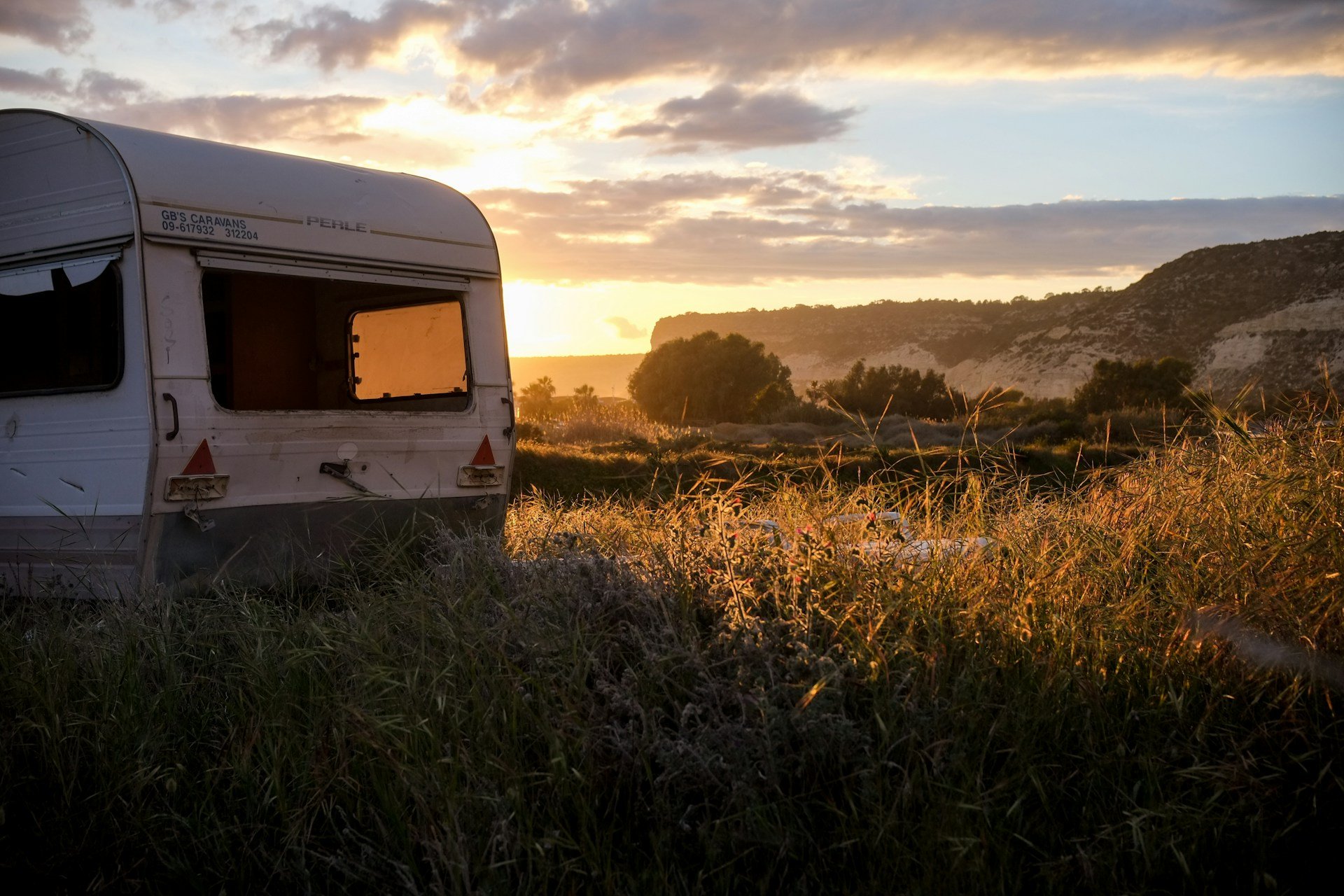
His shabby dwelling was surrounded by Heras fence: a static caravan set on the outskirts of an abandoned quarry-cum-shooting range. Mugabe had moved to the valley from Nottingham in search of a woman he’d met online, and although the relationship hadn’t lasted he’d decided to remain where he was. The city was the death of art, he said, and in a place like the valley where you didn’t suffer the distraction of high wages, where violence was as much of a normality as boredom, you had to focus the mind, appreciate the landscape, internalise. In short, what had driven Annie from the valley was what had persuaded Mugabe to stay.
He’d made the rented caravan his own. A hand-built veranda was balanced on a dodgy parapet, while stored beneath were faded Calor gas canisters resembling rusted bombs. Clay sculptures were set about like chess pawns. Varying in size, Mugabe’s golems were a febrile orange; they had puckish lips and cretinous brows, and were fashioned in a shanty kiln of brick and concrete. A sun lounger demonstrably saw little action whereas a plastic chair was surrounded by grub-shaped dog-ends and empty, warped beer cans. Mugabe’s gleaming silver Granada had no hubcaps and the bonnet was open. Music that Annie regarded as clever and unlistenable played from a little radio, everything powered by a generator that chugged fumes and a carbon funk.
Alex tapped the caravan’s door with her house key, then pushed inside with Annie following. The curtains were drawn inside and a laptop covered in stars sat on the table, an open chat window on the screen beaming the caravan’s main source of light. The whole place stank of feet. Mugabe was standing in profile, pissing in the sink.
Hey, hey, he cried. Hang fire!
Jesus. Annie pushed out into the yard, the door clappering against the caravan wall. The last time she’d seen Mugabe she and Alex had been seventeen. He’d sold them two tabs of LSD, to make their day more interesting, he claimed, because skiving college a couple of times a week so they could skip a random train, travelling all over the country in search of they didn’t know what, had taught the latch-key sisters that one satellite town was as dull as any other, so why not spice things up a bit? Because acid was way more intimidating than the cheap beers they’d been used to, Annie refused her tab. Alex took both then spent the entire journey to Stoke locked in the toilet. Annie managed to get her sister off the train but by the time she was able to coax her down to any semblance of normality, they were badly lost. November, darkening fast. Annie would never forget the scabbed wen under the stranger’s eye, the rote way he itched it as he told her, No, he couldn’t direct them back to the station, made as if to walk away then came at her from behind, dragging her into a ginnel while Alex hallucinated obliviously twenty yards away. That was the day Annie decided to join the force, pinned by a stranger on a pile of flattened cardboard boxes, rain as white noise and a kind of incantation escaping her lips, no one around to help when there damn well should have been.
Toilet’s broke, Mugabe said, tipping his pork-pie hat at Annie and squeezing a fat burst of sanitiser gel into his palm. Greying now, he had that same ready-to-smile face, the same coda tattooed in capitals across his knuckles. NOW + THEN, the hands said.
Annie watched her sister approach Mugabe and thread her arm through his. She was astonished to see Mugabe kiss Alex fully on the mouth.
Devon, I brought my big sister.
Mugabe’s mouth made a wet sound. The broken rocks of the disused quarry behind him and Alex made them look as if they were in another country.
How you doing, girl? he said.
Annie nodded. He had engine oil coating his arms.
She’s giving us a lift, said Alex.
I remember you, said Annie.
Likewise, Mugabe replied. You’re the policewoman.
*
They took the lengthier route, the scenic route. In just a few hours’ time the Shannons’ ashes would be scattered. The snow had gone; it was a bone-dry day, a crumbly sort of sky, not the kind you’d choose what was left of you to become nothing beneath, thought Annie. Although that certainly wasn’t up to the Shannons any more.
Mugabe sat in the back while Alex spoke to him in that didactic way of hers. The pair were planning an installation that was to be projected against Arnold Grange’s exterior. Scenes and stills, mainly: pylons regimented like guardians across vast meadows, lost stags with branch antlers patrolling deserted dual carriageways, tins of glue acting as vambraces for tree boughs and leaking PVA sap. Alex had already begun work on the stop motion footage, the flickering Super 8 stock of shifting stone and soil, broken thorns, gulls with ragged paper serviettes for wings, mad kids in cardboard masks, a coleslaw of Crayola defacing their blank features.
Mugabe lapped it up. We show a bench with a dead guy’s name on it, he said.
Maroon eyes. Scrawny as fuck. Annie had to check herself, keep her eyes on the road.
Are you allowed? she said. You know, is it all right to just beam all this shit onto someone’s house?
Rosie’s house, said Alex. And we’re not planning on showing it to people.
Well what’s the point in that?
Some work you just do, said Mugabe. Most of my stuff, if it was for the public I wouldn’t enjoy it.
Annie tried to ignore his beaming, flat teeth.
We all need something to help us handle how hard life is, Mugabe added.
It’s still Rosie’s property. What about the family? Her kids.
Rosie doesn’t have kids, said Alex. She was an environmentalist.
Didn’t have.
Right. Alex flicked on the radio, a respiration of static filling the car, the odd word striving from the fuzz as if someone was trying to contact them from another dimension.
So who does the house belong to if there’s no next of kin?
Me, said Alex.
Seriously?
Hard to believe, Annie?
You’re the beneficiary of Rosie’s will?
Alex shrugged. It was a surprise to me too.
The car crested the hill before Annie could respond, the windscreen revealing elevated land, private land. An antic tube of smoke smudged the point where the hilltops met the skyline. Mugabe pointed at the ritual. Shep Summers’s land, he said. They’re burning the heather to regenerate it for grouse coverts.
Ready for the glorious twelfth, said Alex bitterly.
Annie directed the car into a lay-by so they could watch the smoke coiling on the fleecy plateau, winding about itself and unravelling again like acrylic ink dropped into a tank of water. None of Summers’s men were manning the fire. Unevenly-spaced ragstone butts for the shooters to hide behind had been erected, grass-topped, evoking Dark Age defensive outposts.
Summers reopened the grouse shoot’s application before Rosie was even cold, said Alex.
Smoke lapped beatifically across the hills, dimming the light.
Bastards, said Mugabe.
How did he react to Rosie’s injunction? asked Annie.
Stop it, said Alex.
How do you think? Mugabe said.
Annie turned in her seat. A grouse shoot will bring a lot of money to the area. A lot of jobs.
A lot of bullshit, said Mugabe.
Pinching the bridge of her nose, Alex muttered something Annie couldn’t make out.
That doesn’t mean they would have done something to Rosie.
Oh, Lex, you reckon? Mugabe said. Look at all this, soon as she’s gone. They don’t give a shit about the place. The rain’s gonna flood off the hills. Where’ll it go? We ain’t got no forests any more. Then there’s the emissions, you know, from the peat, as well as …
He gestured at the smoke, his chapped hand so close to Annie’s face that she could smell the caramel of old tobacco on his fingers. Cocoa butter. He had slick brown chef’s burns up his wrists. And they’ll cull the wildlife, Mugabe said. The birds of prey and the whatsit, stoats.
Stoats? said Annie.
It’s not funny, girl.
Oh, is it not funny?
The land wasn’t made to be messed with.
Do me a favour, mate.
What it is, is what it is.
*
Arnold Grange was decorated with pictures of Rosie, Joss Shannon absent from all but one. Rosie playing with her cat. Rosie after retiring from the university, youthful trips to Kenya, Nepal, Nicaragua. The last years of her life spent with Alex had been extremely well documented. Rain fell almost apologetically over the valley.
People went wild for Mugabe’s vegan buffet. Annie had to admit it tasted okay, lingering at the side of the room, her mouth packed full of lentils. Funerals killed her. In another life Rosie was still alive. In another, Annie was dead. So was Alex. So was everybody else. Each guest was being themselves, in a way. Annie could hear them chatting about their loft spaces, yoga sessions, their children’s lives. There was a lot of talk about ‘how well’ Alex was dealing with everything.
After people had eaten they sat in a circle to share memories of Rosie. When it was her turn, Annie talked about seeing Rosie chained in that tree. A cuddly woman who had described everything as ‘brilliant’ and ‘fantastic’, and now she was gone. Everyone wanted to know what Rosie had sung, but Annie couldn’t remember.
Later she sat beneath the urn, overshadowed by a photo of Rosie as a girl, a booksniff, no doubt, well-meaning, proud and credulous, somewhat difficult to placate. Alex was drunk, so open-featured you could read the happiness on her face as if it was plastered across a billboard. She’d done very well from all of this. The once struggling artiste.
Catching Annie’s eye, Alex made her way over and stood by her side, seeming uncertain, no chair to hand.
I loved her to bits, you know.
I’m sure you did.
Fancy another drink?
Thanks, but I’m trying to lay off all that.
The sisters were quiet for a long time.
So when you thinking for tomorrow? said Annie, standing up.
Well, I want to catch the sunrise, if there is one.
It’ll be nice seeing them off together, won’t it?
Together?
Rosie and Joss.
Alex might have nodded. She might have shook her head.
They’ve waited a long time, said Annie, pausing. This wasn’t what she wanted to say. She had a good idea how that conversation would go.
It will be good seeing them reunited, she added. After all these years.
Fuck, Annie.
What?
When did you get like this?
Like what?
So browned off all the time.
How do you mean? I’m not browned off.
Alex chewed her bottom lip. You must be, or you wouldn’t be constantly trying to get a rise out of me.
Annie could practically smell the leguminous scent of the wet fields beyond the block of wired glass in the front door. I’ve upset you, she said. I don’t know how, but I’ve upset you.
You’re so cynical the way you go about it.
All I was saying was it would be nice for them to be together again.
Alex laughed. Do you think they care what happens to them? They’re dead.
And you say I’m cynical.
Funerals are for the ones left behind. They’re for us. I haven’t decided if I’m scattering them together yet, all right?
The executor’s right.
If you like.
Very nice.
You know, Annie, you’re going to make yourself ill if you go on like this.
I beg your pardon?
I said you’re going to make yourself ill.
Annie batted the wine glass from Alex’s hand.
*
The urns were unexpectedly light, the sky madly spangled with stars. The door to Arnold Grange clicked behind Annie, who made her way up the fell at this early hour, an hour for weeping brows, the going steeped in bog and a terrific sucking of the boots. The ground reminded her of chocolate pudding.
From the tor’s pinnacle the view spanned many miles. It was a pleasing height that happened to overlook Shep Summers’s scorched land. Annie unzipped the backpack. The contours of the fells made her feel dizzy if she stared too loosely at them, as did the banded bronze hues of the Shannons’ urns. Some way off on Scout Moor was Shep Summers’s barn, twin marquees protruding from it, emitting the tireless rhythm of a rave. Acid-house music palpitated across the valley roof. As Annie tried to smile at Alex, she passed her an urn. Neither sister spoke. They unscrewed the urns’ lids and set the contents free. For a brief moment the tipped ash resembled intertwining ribbons. Alex released a glottal sob as the strands disappeared together. She hugged herself, her shoulders rising, falling. Annie reached out to try and comfort her, but a deep cough racked her lungs and she had to bend double and cover her mouth with both hands. All around the two of them a strange mauve glow had begun to striate the heavens. Morning was coming. It was here already. In fact, it had been here the entire time.
From issue 7: autumn/winter 2018
About the Author
James Clarke grew up in the Rossendale Valley, Lancashire. His debut novel The Litten Path won the 2019 Betty Trask Prize. Hollow in the Land, a novel in stories, was published in 2020; his latest book is Sanderson’s Isle (2023). He lives in Manchester.